
Decisive Humility: Leading Without the Loudspeaker
cover image generated with Google NotebookLM

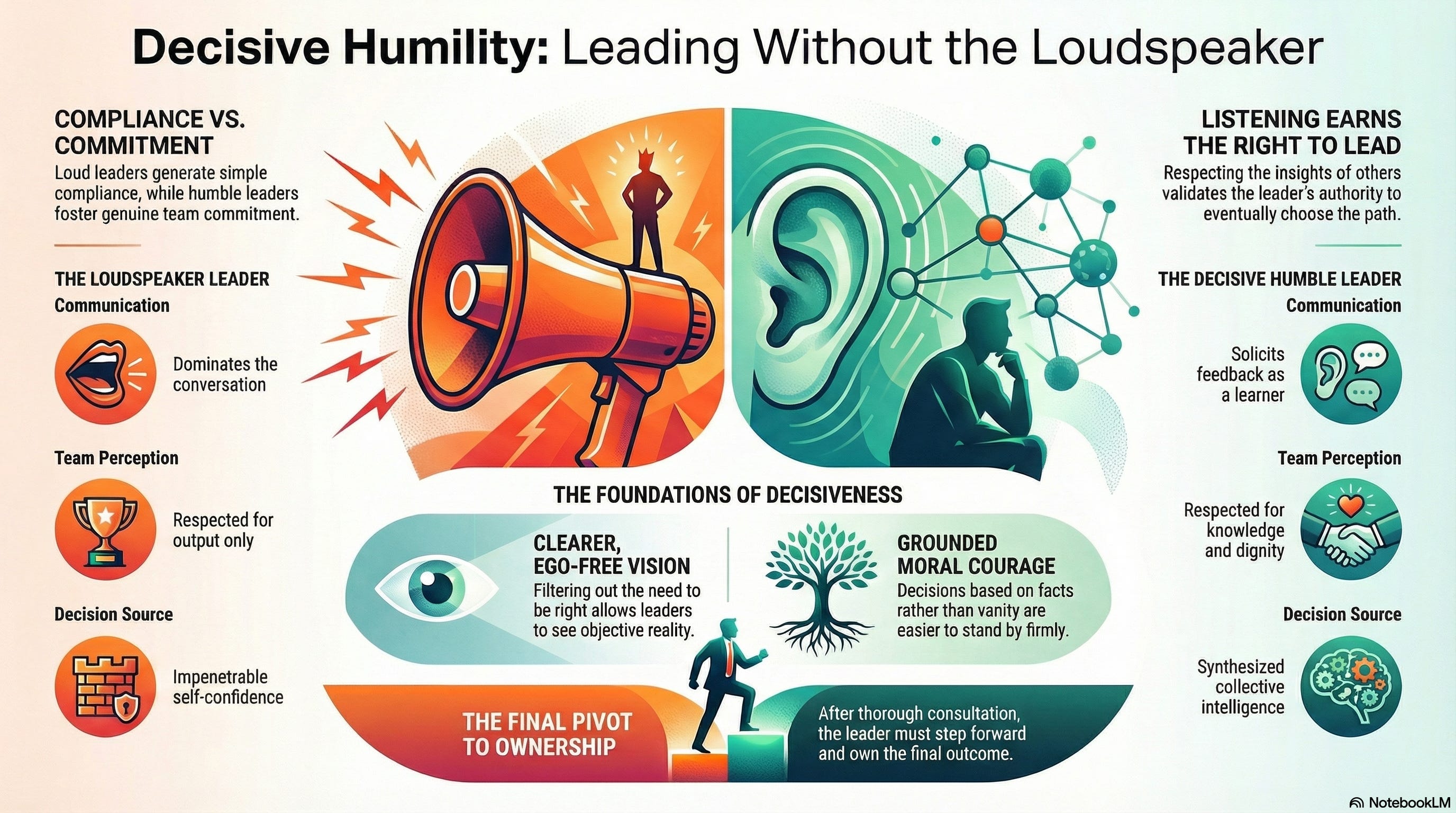
The Decisive Humility: Leading Without the Loudspeaker
We’ve all seen the caricature of the strong leader: the booming voice, the impenetrable self-confidence, the relentless drive that steamrolls dissent. It’s a leadership style often confused with effectiveness - a style that screams, “I know best!”
But what about the quiet power of the humble leader? For too long, humility in leadership has been misunderstood, often equated with weakness, indecision, or a reluctance to take the reins. We imagine a mousy figure, unsure of themselves, asking everyone else what they should do. This couldn’t be further from the truth.
True humility in a leader is not about having a low opinion of oneself; it’s about having a high regard for others. It’s the recognition that the team, the mission, and the collective wisdom are vastly superior to any single individual’s ego. And here is the crucial paradox: The truly humble leader is often the most decisive.
The Listener vs. The Loudspeaker
People crave two things simultaneously from their leaders: to be genuinely heard and to be confidently led.
The loud, arrogant leader might dominate the conversation, projecting an image of certainty. But deep down, the team knows they are simply being told what to do, not involved in the process. This generates compliance, not commitment. It leaves people feeling respected for their output, perhaps, but not for their insight.
The decisive, humble leader operates differently. They listen - truly listen - with a learner’s mindset. They solicit feedback, not as a formality, but as essential input. They understand that the person closest to the problem usually has the best solution. They respect the knowledge and dignity of every person in the room.
This act of listening is what earns them the right to lead. When the time for input is over, and the data, perspectives, and potential pitfalls have been thoroughly weighed, the humble leader steps forward.
Humility as the Foundation for Decisiveness
Why does this genuine humility lead to better decisions?
Clearer Vision: By filtering out ego, the leader can see the situation clearly, unclouded by the need to always be right. They are comfortable admitting when they don’t know the answer and are quick to credit others when they do.
Collective Wisdom: They synthesize the best ideas from the team. Their decision is not solely theirs; it is the most robust conclusion drawn from the collective intelligence they meticulously gathered.
Moral Courage: The decision, when it comes, is grounded in objective reality and mission necessity, not personal vanity. This gives the leader the moral courage to make the tough, unpopular call if the facts demand it.
The moment of decision is where the shift happens. After the exhaustive process of consultation, the humble leader must stand up and say, “We have heard everyone. This is the path we are taking. I own this outcome.”
This is the decisive humility that people want to follow. They feel respected because their voice was valued, and they feel safe because they are being led by someone who prioritizes the truth and the mission over their own need for glory.
A humble leader is not afraid to lead; they are just afraid of leading poorly. And that fear is a powerful motivator for excellence. So, ditch the loudspeaker. Pick up the magnifying glass and the map. Listen, respect, and then, without hesitation, lead.
A thank you to Stan Jewell for taking time to have a conversation with me about my book, Quiet Formation, and this exact idea of humility not meaning wishy washy leadership. Stan is an OUTSTANDING leader. I’m grateful for the time he has given to me over the years. I always walk away better for it!
Quiet Formation and Quiet Formation: Journal on Amazon! Get your copies today!