
The Pendulum Swings
A reflection about the quietly formed leader and the security of their leadership

The Pendulum Swings
This movement is often driven by a subtle, exhausting engine: the need to perform.
When we lead from the edges of the pendulum, we are usually trying to impress someone. We polish our surface until it is slick and lifeless, reflecting back a carefully curated lie about our own strength. We call this “Will,” but it is actually “Willfulness” - a hard, tight knot in the solar plexus that believes it must force the world into a shape of its own choosing.
But there is a different way to stand.
True leadership effectiveness doesn’t live at either extreme of the swing. It lives in the “Center” - that coordinate of light and mass where you are radically present and deeply secure.
Finding your center is the practice of arrival. It is the persistent refusal to be anywhere else but where your feet are. When you are centered, your security is no longer on trial. You don’t need the room to revolve around you because you are anchored in something deeper than approval.
Humility is not thinking less of yourself; it is thinking of yourself less. It is the freedom of releasing that constant interior monologue that asks: How am I doing? How do I look? What do they think?
When that noise stops, you can finally hear the person across the table.
A centered leader has the “X-ray vision” to see the root causes beneath surface-level problems. Instead of rushing to a ten-second “quick fix” to prove your competence, you zoom in to the conversation. You use two ears and one mouth to listen twice as much as you speak.
This is the kind of leadership that calms. You become the person who validates feelings before solving problems. You recognize that a long, angry email is actually a signal of hidden tension that requires a human voice, not a digital defense.
Centered leaders “paddle out past the break”. The break is where the water is shallow, noisy, and reactive - where energy collides and everyone is bracing for impact. But past the break, the water is deeper. There, timing, patience, and judgment matter more than force.
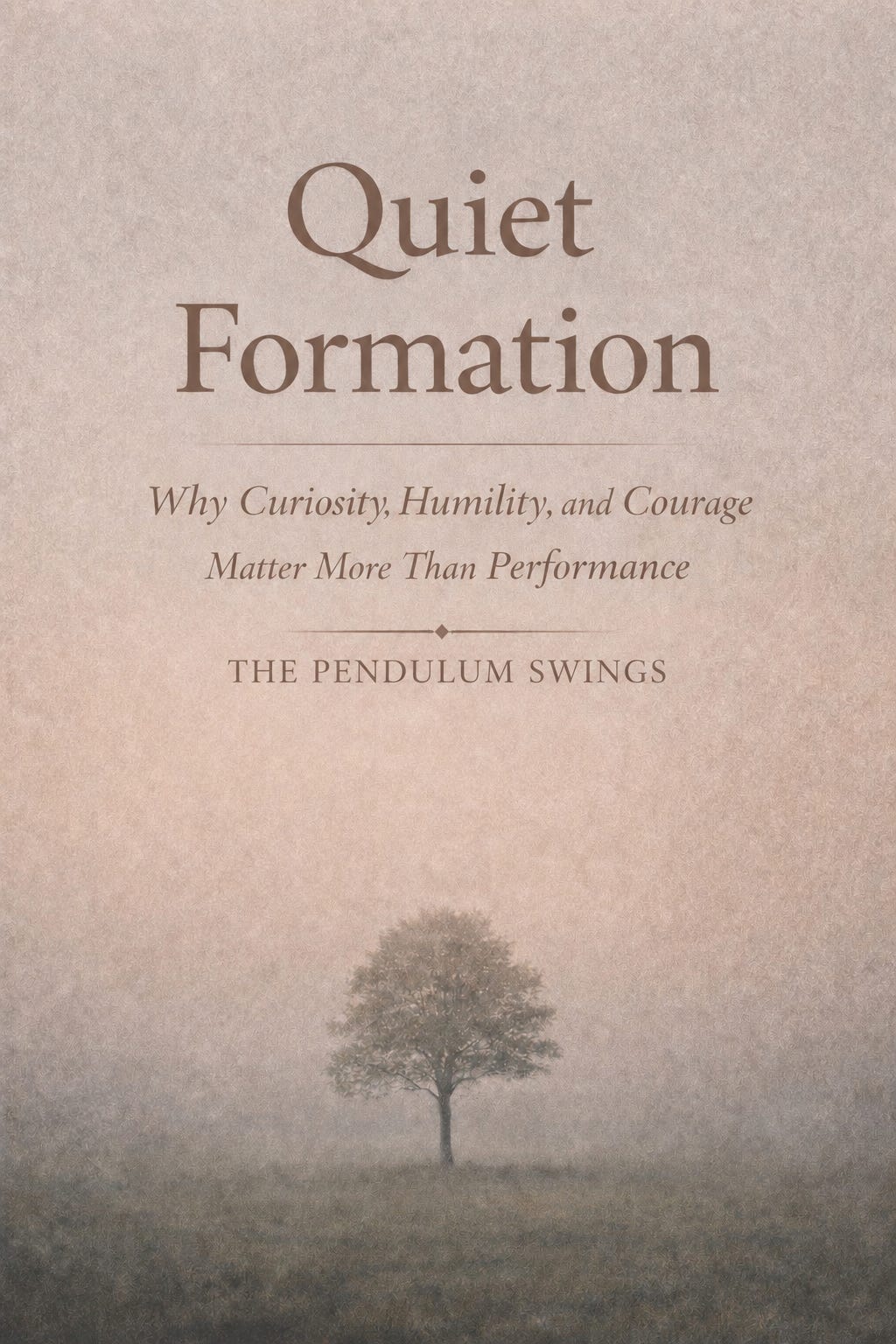
Control is the armor of the insecure. It restricts the breath and suffocates the spirit of the organization. But empowerment is the work of a leader who has undergone “Quiet Formation” - the slow removal of what you perform until what remains is what you actually are.
Formation is not addition; it is subtraction. It is the ego loosening its grip in small surrenders: the credit you didn’t claim, the admission that you didn’t know, the silence you held when the room expected noise.
When you find your center, you stop demanding lightning and start taking the next small, faithful step. You become a leader worth following because you’ve done the work of becoming someone worth following before you ever asked anyone to follow.
So, this week, I challenge you to observe your own focal length.
Are you currently trapped in the “shore-light” of immediate, performative tasks?
Do you have the courage to “paddle out” and seek the stillness required for clarity?
Where will you aim today?
Quiet Formation is on Amazon! So is the Quiet Formation Journal!