

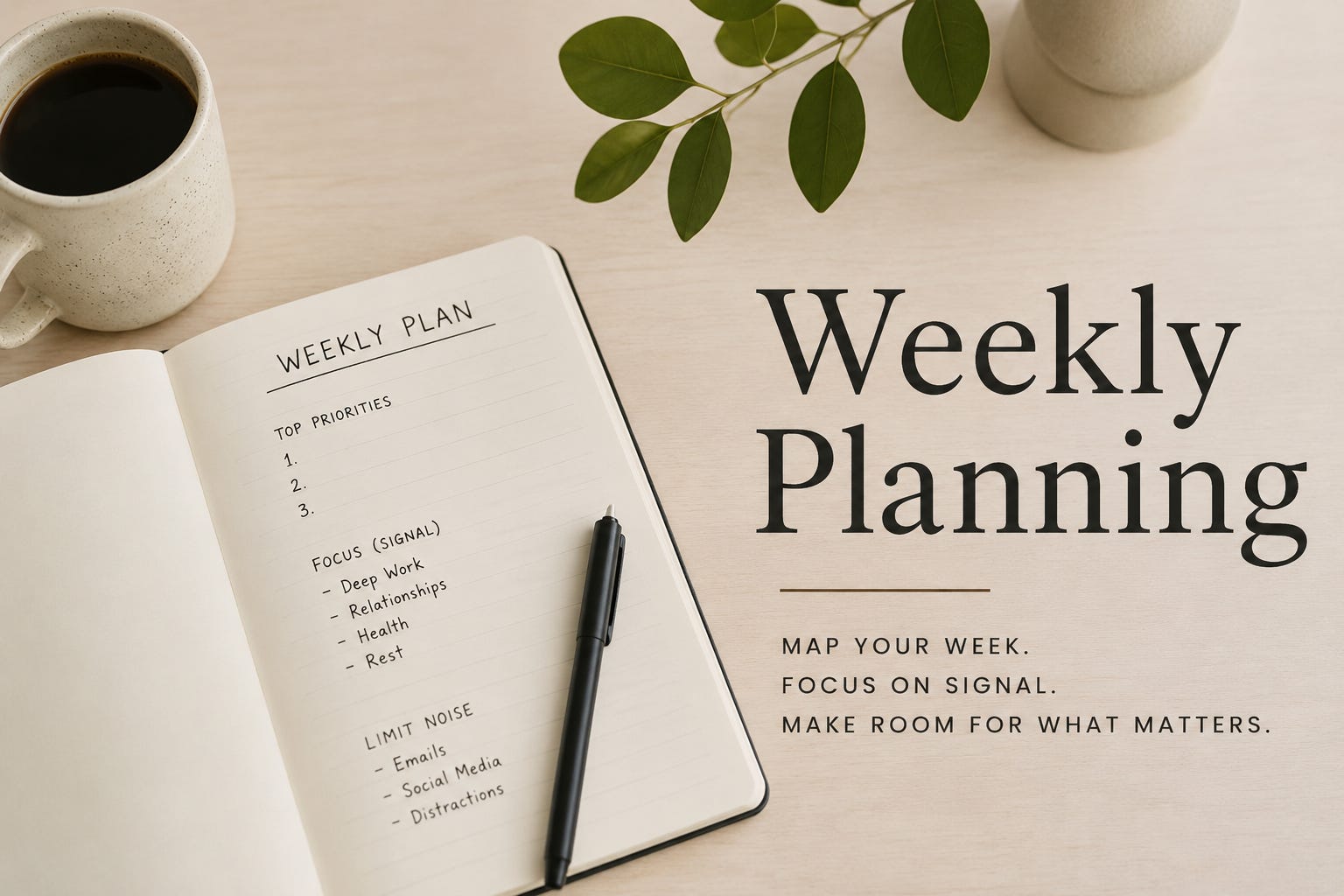
Every Sunday evening, I sit down with a notebook, a calendar, and a quiet hour to prepare for the week ahead. It is one of the most practical disciplines I have developed for executive functioning, focus, and reducing unnecessary stress. I do not always execute the week perfectly, but I rarely regret taking the time to make a plan.
Without intentional planning, life becomes reactive. Email dictates the day. Notifications pull attention in every direction. Other people’s priorities quietly become your own. By Wednesday, it can feel like motion without progress - activity without clarity.
Weekly planning helps me fight that drift.
For me, executive functioning is not simply about productivity. It is about stewardship. It is the ability to organize attention, prioritize wisely, and create enough structure to live intentionally instead of emotionally reacting to every demand that appears.
Sunday evenings have become the reset point.
I usually begin by looking backward before looking forward. I review the previous week honestly. What actually mattered? What created energy? What drained it? Where did I spend too much time in noise instead of signal?
Signal is the work, relationships, and responsibilities that genuinely move life forward. Noise is everything that creates urgency without significance. Signal builds momentum. Noise creates exhaustion.
The challenge is that noise is often louder.
An unanswered email feels urgent. A distracting conversation feels important. Endless scrolling feels temporarily relieving. Meanwhile, the meaningful work -strategic thinking, leadership, writing, parenting, rest, spiritual formation, friendship - requires deliberate attention and protection.
So on Sunday evenings, I try to identify the signal first.
I write down the three to five most important priorities for the coming week. Not twenty. Not an overwhelming master list that creates guilt before Monday even begins. Just the few things that would make the week meaningful if completed well.
Then I begin mapping the week practically.
I review meetings and appointments. I think about where deep work can happen. I identify where difficult conversations may need emotional energy. I consider meals, family time, exercise, and margin. I try to notice where the week already feels overloaded before it arrives.
Planning does not remove uncertainty, but it reduces friction.
A good plan creates decision-making ahead of time. It limits the number of unnecessary choices you must make while tired, stressed, or distracted. Instead of waking up every morning asking, “What should I do today?” you already possess a framework for attention.
That framework matters more than motivation.
Most people assume organization is about personality. I do not think that is true. I think organization is often an act of compassion toward your future self. It is creating conditions where clarity becomes easier and chaos becomes less dominant.
Of course, no week unfolds perfectly.
Unexpected problems appear. Priorities shift. Emergencies interrupt carefully designed schedules. Some weeks simply unravel. But even then, planning still helps. A mapped week provides a place to return when distraction and disorder inevitably arrive.
Weekly planning is not about control. It is about intentionality.
Every Sunday evening, I sit down and try again: to think clearly, prioritize wisely, reduce noise, and create space for what matters most.